
Microscope slides
-

Superfrost base slides
Producer: Menzel
Nr CAT:
Description: white, blue, pink, yellow, green, purple
check -

Frosted base slides
Producer:
Nr CAT:
Description: description field, cut edges, descriptive field, ground edges
check -

-

Cover slides
Producer: Menzel
Nr CAT:
Dimensions: [mm], 15 x 15, 18 x 18, 20 x 20, 22 x 22, 24 x 24, 24 x 26, 24 x 32, 24 x 36, 24 x 40, 24 x 50, 24 x 60
Other: pcs., 200, 100
check -

-

-

-

-

-

Steel tweezers for cover slides
Producer: Schneider
Nr CAT:
Description: straight, curved, with a stopper
check -
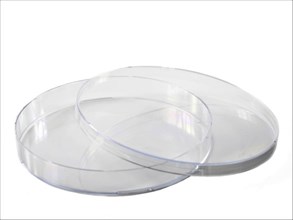
Plate, petri dish made of borosilicate glass
Producer: SIMAX
Nr CAT:
Dimensions: d1=200 mm d2=190 mm h=35 mm, d1=250 mm d2=240 mm h=50 mm, d1=300 mm d2=288 mm h=52 mm
check -
Quartz Petri dish
Producer: Megan
Nr CAT:
Dimensions: d=70 mm, h=18 mm, wall thickness 1,9 ±0,2, d=80mm, h=18 mm wall thickness1,9 ±0,2, d=90mm h=18 mm wall thickness 1,9 ±0,2
check -

-

Petri dish made of soda-lime glass
Producer: Archem
Nr CAT:
Dimensions: diameter 90 mm, diameter 100 mm
check -


Microscope slides
A microscope slide is a thin, transparent plate of glass or plastic used to prepare a sample for observation under a microscope. In practice, two basic elements are distinguished: the basic slide, which is the carrier of the preparation, and the cover slide for the microscope, which covers the sample and protects it, and the lens.
The basic slide is the main plate (usually 25 × 75 mm) on which the test material – cells, tissues or microorganisms – is placed. A cover slide, on the other hand, is a thin, square glass applied to the specimen in order to protect it, flatten it and improve the quality of the image under the microscope.
Microscope slides are a basic element of laboratory work and are indispensable equipment in biological, medical and educational research. Their quality directly affects the accuracy of observations made with the use of microscopes and other accessories for microscope slides.
Laboratory Glassware Materials and Quality Standards
High-quality laboratory glassware from which basic microscope slides are made must meet certain standards of transparency, thickness and chemical resistance. Sodium-calcium or borosilicate glass is most commonly used, which ensures good light transmission and compatibility with reagents.
Key features:
- High optical clarity
- smooth, secure edges
- resistance to basic chemical reagents
- uniform thickness affecting image sharpness
In addition, it is worth noting that high-quality microscope slides are manufactured in accordance with strict quality standards, which guarantee repeatability of test results. Precise control of material thickness and homogeneity is crucial, especially in high-magnification microscopy, where even minimal deviations can affect image quality. Therefore, when choosing a microscope slide, you should be guided not only by the price, but above all by the technical parameters and the purpose for specific analyses.
Functions and technical parameters of cover slides
Cover microscope slides not only have a protective function, but also have a direct impact on the quality of microscopic observation. Their main task is to protect the preparation from drying, contamination and mechanical damage, as well as to provide appropriate optical conditions to obtain a sharp image.
Key parameters:
- very small thickness (usually 0.13–0.17 mm), allowing for correct focusing
- high transparency for minimal light loss
- compatibility with various types of microscope lenses
- Can be used in light and fluorescence microscopy
In addition, the uniformity of the surface and the absence of optical distortions that could affect the image quality are important. Well-selected microscope cover slides stabilize the specimen, limit its movement and improve the contrast of observation, which is of particular importance in diagnostic analyses and scientific research.
Specialized variants for advanced diagnostic analyses
Depending on the type of examination, microscope slides are available in many specialized variants, which allow you to adapt the specimen to a specific analytical method and increase the precision of observation.
The most commonly used types are:
- with a matte field for description, allowing convenient marking of samples
- chamber (cavity), intended for the observation of liquids and live microorganisms
- coated, which increase cell adhesion and stability of the formulation
- fluorescent, used in analyses requiring marking and light excitation
Such microscope slides are particularly important in medical diagnostics, microbiology and scientific research, where precision and repeatability of results are crucial. Thanks to their use, it is possible to conduct more advanced structural and functional analyses at the cellular level.
Staining techniques and organization of work with samples
During the preparation of microscope slides, various staining techniques are used, which significantly improve the visibility of cell structures and enable their accurate identification. Depending on the type of test, simple, complex or specialized stains are used, adapted to a specific type of biological material.
Not only microscope slides play a key role in the entire process, but also appropriate preparation tools, such as automatic pipettes, microbiological eas or tweezers, which allow for precise and safe transfer of the test material.
A well-organized workstation – with separate zones and an orderly sample flow – increases the repeatability of results, reduces analysis time, and reduces the risk of contamination and measurement errors.
The impact of airtight packaging and dosing systems on occupational hygiene
Storage is crucial for the quality of formulations. A microscope slide box or microscope slide case protects them from dust, moisture, and damage.
Key features:
- Tough Hard Case
- compartments for easy segregation
- Possibility of sample determination
Thanks to this, microscope slides where to buy and how to store them becomes as important a question as their selection.
Complementary equipment for light and fluorescence microscopy
Effective work requires not only glasses, but also additional equipment. The basic set includes:
- microscopes (light and fluorescence),
- reagents and dyes,
- accessories for microscopic slides,
- preparation tools.
A well-chosen microscope slide in combination with the appropriate equipment guarantees precise and reliable test results.