
Mechanical laboratory stirrer

-

Mechanical stirrers IKA
check -

Mechanical stirrers CAT
CAT mechanical stirrers are laboratory devices used for rheometric tests. The advantage of these mixers is the use of a high-power microprocessor,...
check -
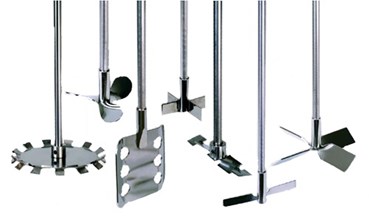
Tips for CAT mechanical stirrers
CAT mechanical stirrer tips are indispensable items properly adapted to all solution mixing needs in any laboratory, whether professional or...
check -
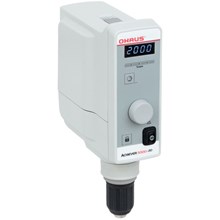
Mechanical stirrers Achiever
Achiever mechanical mixers, reliable and extremely spend, are designed for daily use. The brushless motor and torque compensation technology...
check
Mechanical agitators
Mechanical agitators are advanced laboratory equipment designed to mix liquids of different viscosity, density and volume. They operate on the basis of an electric drive that transmits torque to a shaft terminated by a rotor or blades. This makes it possible to carry out processes that require intensive mixing, homogenization and maintaining homogeneity of solutions in real time. They are used both in research laboratories and in the chemical, pharmaceutical, cosmetic and biotechnology industries.
Advantage of the top drive when working with large volumes of liquids
A mechanical stirrer has a special place in laboratory equipment. This device consists of an electric motor that drives a glass or metal rod with blades of different shapes and angles. This design allows you to match the mixing intensity to the properties of the medium.
The top drive is particularly important when working with large volumes of liquids, because:
- ensures stable transmission of torque directly to the mixing system,
- enables operation with high tanks and reactors,
- minimizes energy losses when mixing viscous liquids,
- allows for long-term continuous operation without loss of performance.
The offer includes mechanical stirrers adapted to work with volumes up to 200 liters, which makes them both a laboratory and semi-technological solution.
Use in pharmacy and biotechnology to create emulsions and suspensions
The construction of a mechanical laboratory stirrer consists of a motor, a rod and a replaceable working element. The key role is played by the rod, which must be resistant to mechanical loads, aggressive chemicals and elevated temperatures.
In practice, mechanical laboratory agitators are used in the following processes:
- creation of pharmaceutical and cosmetic emulsions,
- preparation of suspensions of drugs and active substances,
- conducting microbiological cultures in biotechnology,
- production of preparations with controlled viscosity and stability.
Their use results from the possibility of maintaining the homogeneity of the system even under changing physicochemical conditions.
Generating turbulent motion for optimal sample homogeneity
Modern mechanical mixers are equipped with flexible shock absorbing elements that reduce vibrations and protect the drive system from overload. This allows the device to work stably even at high speeds.
The mechanism of action is based on generating turbulent motion in a liquid. The resulting vortices cause intensive movement of molecules, which leads to rapid homogenization of the sample regardless of its composition.
Selection of the right rotors and working tips for the specific process
The selection of the work element is crucial for the efficiency of the mixing process. Different types of impellers are used depending on the viscosity and nature of the liquid:
- vane rotors – for liquids with low viscosity,
- turbine rotors – for emulsions and slurries,
- anchor rotors – for very dense liquids and pastes,
- Propeller rotors – for intensive mixing of large volumes.
The speed range in modern devices ranges from a few to several thousand rpm, and precise adjustment allows the process to be adapted to the requirements of the experiment.
Correct installation of the apparatus using tripods and clamping brackets
Correct installation of the mechanical stirrer is crucial for work safety. The device should be mounted on a stable laboratory tripod that eliminates the risk of vibration and displacement. In practice, it is also important to choose the right clamping handle for the diameter of the agitator body and the height of the vessel, so that the working shaft works in the geometric axis of the system.
The most important rules include: axial positioning of the mixing shaft, proper fixation of the vessel, maintaining a minimum distance from the walls, checking the stability of the entire system before commissioning.
In addition, you should take into account the initial check of the clearances in the shaft connection and make sure that the fasteners do not come loose when operating at higher speeds.
Integration with laboratory reactors and temperature control systems
Advanced mechanical agitators can be integrated into laboratory reactors, allowing chemical reactions to be carried out under controlled conditions. Cooperation with heating or cooling jackets allows the process temperature to be mixed and regulated at the same time.
Microprocessor systems allow you to maintain a constant torque regardless of changes in the viscosity of the medium.
IP54 protection standards and anti-splash systems
Modern devices meet IP54 standards, which means resistance to dust and liquid splashes. In practice, this results in greater durability and calmer operation in laboratory conditions, especially where magnetic stirrers and other intensive sample mixing systems are used.
In such applications, not only the stability of the device itself is important, but also the safety of the entire process. That is why protections are used to protect the motor from overload, automatic shutdown in the event of failure, operating temperature control and solutions to reduce splashing of liquids during mixing. This is especially important when working with hotplates and classic laboratory vessels, where it is easy to overheat or dirty the station.
Remote parameter control and automation via digital interfaces
Modern mechanical mixers are equipped with digital systems that enable programming of operating parameters and data archiving. The software allows you to control multiple processes simultaneously and analyze their course.
The LabControl CAT system can monitor up to 254 processes, which is important in research and industrial environments that require full documentation.